by Brandon Ross | 22 September 2025 | Mathare, Nairobi
Nairobi wasn’t the point. Mathare was.
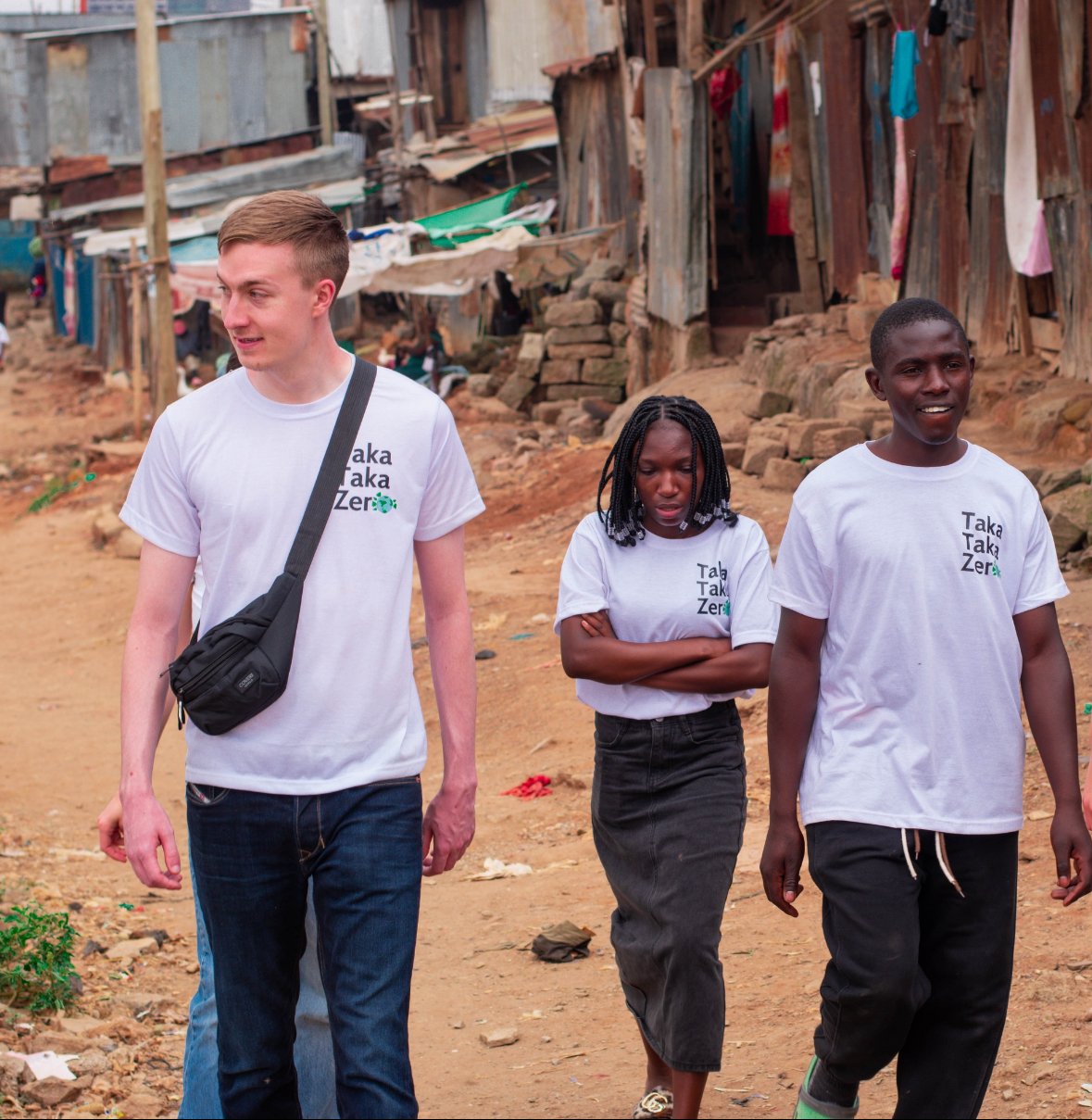
I didn’t go to Nairobi to feel good about myself.
That sounds defensive written down, but it matters. This trip wasn’t a gap-year add-on or a story I wanted to tell later. I went because, for the last 15 months, I’ve been involved with Taka Taka Zero in a finance and strategy capacity from the UK, and there was a growing discomfort in doing that work entirely at a distance. I was looking at numbers, forecasts, constraints, and decisions that affected real people, while my own understanding of their day-to-day reality was abstract at best.
At some point, that disconnect started to feel lazy.
So I booked the trip. Not to “help”, not to “give back”, but to see properly. To put context behind the spreadsheets. To understand what my work actually sat on top of.
Nairobi itself didn’t register much at first. Like most big cities, it’s loud, fast, contradictory. It could have been anywhere. Mathare couldn’t.
The discomfort wasn’t dramatic. It was constant.
Mathare isn’t a place you ease into.
What struck me wasn’t shock or horror in the cinematic sense. It was density. People, structures, noise, movement – all layered tightly on top of each other. Everything felt close. Lives overlapping. No clean lines between work, home, rest, survival.
I became very aware of my own body there. How I walked. Where I stood. How little I knew about what was appropriate. Even silence felt exposed. You can’t blend in by being quiet; you just become more obviously out of place.
The local team were calm in a way I wasn’t. This wasn’t new terrain for them. This was their operating environment. Watching them move through it with confidence made my own internal tension more visible.
There’s a particular kind of discomfort that comes from realising you are not needed in the way you might have assumed. Not because people are ungrateful or dismissive, but because systems already exist, rhythms already work, and your presence is not central.
That was clarifying.
Seeing the work from the inside changed how I think about “impact”
From the UK, it’s easy to talk about impact in clean language. Outputs. Metrics. Cost efficiency. Scale.
On the ground, impact is slower, messier, and more conditional.
I spent time with teams who understand constraints in a way I never will. Cash flow isn’t theoretical. Supply interruptions aren’t operational annoyances; they ripple outward immediately. Small inefficiencies compound quickly when there is no buffer.
What surprised me was how pragmatic everyone was. There was no romantic framing of hardship. No appetite for pity. The conversations were practical: what works, what doesn’t, what can realistically change, and what probably won’t.
That challenged one of my quieter assumptions – that clarity comes from education or external perspective. In many cases, the clearest thinking was already there. The limitation wasn’t intelligence or effort. It was leverage.
As someone studying accounting, I’m used to believing that better systems automatically lead to better outcomes. Mathare complicated that belief. Systems matter, but they sit inside realities that don’t bend easily to logic or optimisation.
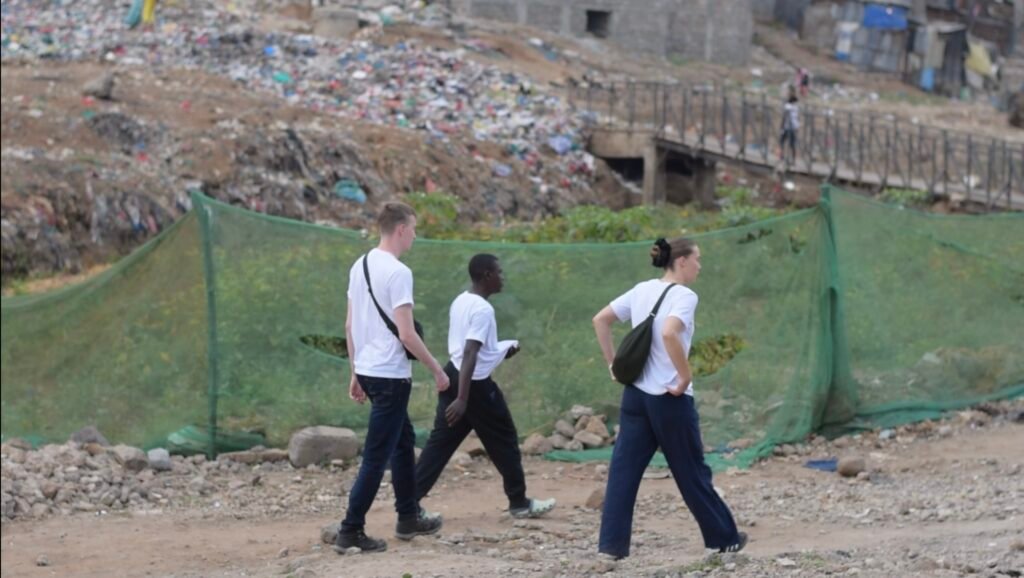
Privilege became harder to define
I’ve always understood, intellectually, that I’m privileged. British passport. Education. Safety nets. That’s not new information.
What changed was how unhelpful that word felt in practice.
Privilege, as a concept, flattens differences. It risks turning complexity into guilt or distance. In Mathare, I met people whose resourcefulness, resilience, and situational intelligence far exceeded mine. And yet the constraints they operate under are structural and immovable in ways I’ve never faced.
So where does that leave responsibility?
I don’t think it means romanticising struggle, or pretending that “everyone has advantages”. It also doesn’t mean positioning myself as someone who must atone for circumstances they didn’t choose.
What I felt instead was a clearer obligation to be precise. To not hide behind broad narratives. To do my work carefully, knowing it connects to realities I can’t fully absorb but can respect.
That’s a quieter form of responsibility than the one social media encourages, but it feels more honest.
Some things didn’t sit comfortably – and still don’t
There were moments that made me uneasy in ways I can’t neatly resolve.
Being photographed. Being introduced. Being clearly marked as someone “from outside”. Even when intentions were good, the asymmetry was obvious. I could leave. Everyone else stayed.
I don’t think the solution is pretending those dynamics don’t exist. But acknowledging them doesn’t dissolve them either. They remain.
There’s also the question of contribution. What does it mean to “add value” when your skillset is abstract and your understanding is partial? Sitting in meetings where my input was technical but my context was thin forced a kind of humility I’m not always good at.
I noticed how quickly I wanted to retreat into competence. To focus on numbers, frameworks, things I could control. That instinct was revealing.
It made me more aware of how easily people like me can mistake fluency for usefulness.
This trip clarified what I don’t want my life to be built on
I talk a lot about lifestyle design – freedom, choice, autonomy. Those ideas didn’t collapse in Nairobi, but they did sharpen.
Freedom, in isolation, feels thin. Optimising purely for personal comfort now seems strangely small. At the same time, I’m wary of swinging to the opposite extreme – of defining meaning through proximity to hardship or “doing good”.
What feels more grounded is this: I want my work to be anchored in reality, not abstraction. I don’t want to build a life where my decisions affect others invisibly. Distance creates irresponsibility as easily as it creates efficiency.
That doesn’t mean I now have answers about how to live, earn, or contribute. If anything, the trip exposed how incomplete my thinking still is. But it did remove some illusions.
Not everything important is scalable. Not every problem is mine to solve. And not every experience is meant to resolve into clarity.
I left with more questions than conclusions
Since coming back, I’ve noticed how quickly normal life absorbs everything. The routines return. The urgency fades. That worries me a little.
I don’t want this experience to become a story I tell rather than a reference point I use.
I’m still processing what appropriate involvement looks like. How to balance ambition with restraint. How to pursue financial independence without detaching from consequence. How to work inside systems without becoming numb to their limits.
There’s no neat takeaway here. No polished lesson. Just a deeper sense that context matters more than commentary, and proximity matters more than intention.
Mathare didn’t give me direction. It gave me friction. And I suspect that friction is the point.
This trip now sits inside a wider journey – not as a defining chapter, but as a grounding one. A reminder that whatever I build next should be robust enough to face reality, not just look coherent from a distance.
I don’t know exactly what that means yet.
But I’m glad I went.